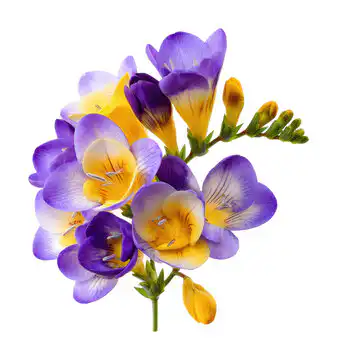
A freesia is a herbaceous perennial cormous plant in the genus Freesia (family Iridaceae), native to southern Africa and prized for its fragrant, funnel-shaped flowers on one-sided spikes. These blooms, available year-round in cultivation, feature in floristry for their citrusy or sweet scents and upward-facing display, symbolizing innocence, friendship, and trust.
Botanical overview
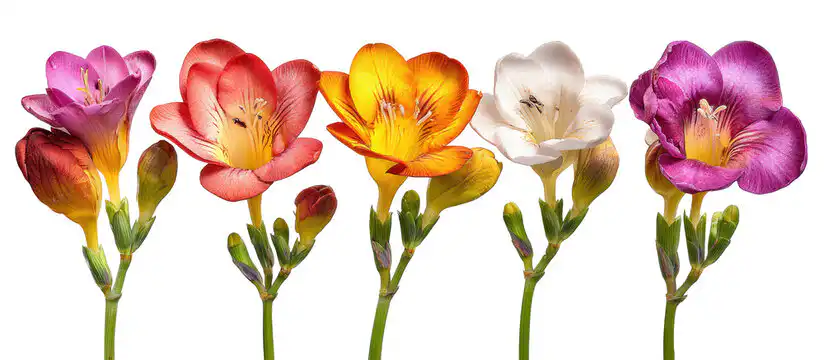
Freesias grow from conical corms, producing narrow, grassy leaves in a fan and wiry, arching stems 10–60 cm tall bearing 5–10 tubular flowers per spike. The flowers, often fragrant, come in white, yellow, orange, pink, red, purple, or bi-colours, with single, semi-double, or double forms; the spike bends at right angles to present blooms horizontally.
- Key traits: Petals are six in number, slightly curled at edges, with a lemon, baby powder, or spicy scent varying by hybrid; F. refracta and F. armstrongii are common parents of cultivars.
- Foliage and habit: Sword-like leaves 10–30 cm long emerge in tufts, with plants preferring cool conditions and going dormant in hot summers.
Taxonomy and origins
Freesia comprises about 16–20 species in the iris family, mainly from South Africa, with hybrids derived from species like F. laxa (flatter flowers) and F. corymbosa (white, scented). Named after German physician Friedrich Freese, they thrive in mild winters and dry summers mimicking their Cape region habitat.
Cultivation and care
Freesias need well-drained soil, full sun to partial shade, and cool temperatures (below 70°F/21°C for blooming), making them ideal for pots, greenhouses, or mild climates (zones 9–10). Plant corms pointed-end up in autumn or spring, water moderately, and store dry in summer dormancy.
- Garden tips: Succession plant for extended bloom; protect from ethylene (causes bud drop), aphids, thrips, and rot; hardy types can naturalize in suitable spots.
- Vase life: 7–12 days with proper conditioning (cool storage, medium water, avoid fluoride).
Uses and floristry
Freesias excel as cut flowers in bouquets, wedding work, and arrangements due to their scent, longevity, and unique one-sided racemes that add movement. They suit modern, romantic, or cottage styles and attract pollinators in gardens.
Symbolism and appeal
These delicate blooms represent purity, thoughtfulness, and new beginnings, often gifted for friendships or milestones; their fragrance evokes nostalgia and joy.

What is the best flower delivery company in the UK?
Flowers can make any occasion memorable. They show care, love, or sympathy without words. Finding the best flower delivery company in the UK is not
Rainbow Tulip Bouquet – A Vibrant Gift for Every Special Occasion (Next Day UK Delivery Available)
Looking for the perfect way to brighten someone’s day? Our Rainbow Tulip Bouquet is a stunning and joyful arrangement that makes an unforgettable gift for
Purple and White Flower Bouquet – A Timeless Gift for Every Occasion Next-Day UK Delivery
Looking for a meaningful gift that speaks volumes without saying a word? Our Purple and White Flower Bouquet is a stunning arrangement that combines elegance,