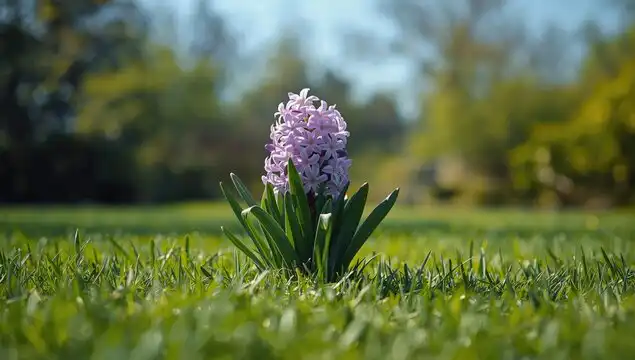
Hyacinths (Hyacinthus spp., primarily H. orientalis) are bulbous perennial plants in the Asparagaceae family (formerly Liliaceae), native to the eastern Mediterranean and prized for their intensely fragrant, cylindrical spikes of star-shaped flowers that bloom in early spring. These compact plants, reaching 20–30 cm tall, feature dense racemes of 20–50 florets in vibrant blues, purples, pinks, reds, whites, and bicolours, making them staples in spring gardens, forcing pots, and floristry.
Table of Contents
Botanical Characteristics
Hyacinth bulbs consist of fleshy, tunicated scales surrounding a central growing point, producing strap-like, semi-erect leaves 15–25 cm long in a basal rosette. A stout, leafless scape bears the flower spike, with each floret having six tepals fused into a tube that flares into lobes, six stamens, and a superior ovary developing into a loculicidal capsule with black seeds.
- Inflorescence and fragrance: Florets are sessile or nearly so, creating a solid spike; scent compounds like indole and phenethyl alcohol give the characteristic sweet, heady aroma, varying by cultivar (e.g., blue ‘Delft Blue’ more intense than whites).
- Growth cycle: Emerge post-chilling (vernalization), flower 2–3 weeks, then foliage yellows as bulb replenishes for next season; offsets form daughter bulbs.
Taxonomy and Cultivars
The genus Hyacinthus includes three species, but horticulture centers on hybrids of H. orientalis from Turkey and Syria, with over 2,000 cultivars classified by Royal Horticultural Society into Early, Mid, and Late groups by bloom time. Roman hyacinth (H. orientalis albulus) offers slender spikes; H. amethystinus and H. cervicus contribute wild traits to breeding.
Cultivation Practices
Hyacinths require full sun to partial shade, fertile, well-drained soil (pH 6–7), and 10–12 weeks of 4–7°C pre-chilling for outdoor bloom; plant bulbs 10–15 cm deep in autumn. Zones 4–8 hardy; force indoors by pre-chilling prepared bulbs in water or pebbles.
- Propagation and maintenance: Divide offsets every 3–4 years; avoid replanting in same spot (bulb exhaustion); deer/squirrel resistant due to toxicity (contains oxalates).
- Challenges: Bulb rot in wet soils; viral mosaic from aphids; mitigate with drainage and hygiene.
Floristry and Economic Uses
Pre-cooled “prepared” bulbs enable winter forcing for holiday sales (Christmas, Easter); cut spikes last 1–2 weeks in vases with floral preservative. Essential oils from flowers used in perfumery; minor ornamental role in bedding schemes with tulips and pansies.
Cultural and Symbolic Significance
Named after Greek myth of Hyacinthus (blood drops forming flowers), they symbolize playfulness, constancy, and spring rebirth; blue for sincerity, purple for sorrow. Dutch production dominates global trade, peaking February–April for Northern Hemisphere markets.

Valentine’s Day Roses Collection – Luxury Bouquets by Online Flower Company
May – a month which welcomes an abundance of flowers, but there is one stem whose return truly sets hearts aflutter. From late April the peony, cel…

Seasonal favourite: Peonies
Whether it’s the hue of a precious gem or a stem that reminds them of a special time or place – our florists take inspiration from a plethora of su…

How to dress a festive table
For those of you hosting this Christmas, read on; it’s time to polish up the cutlery, bring out the china plates, and brush up on our top tips on…