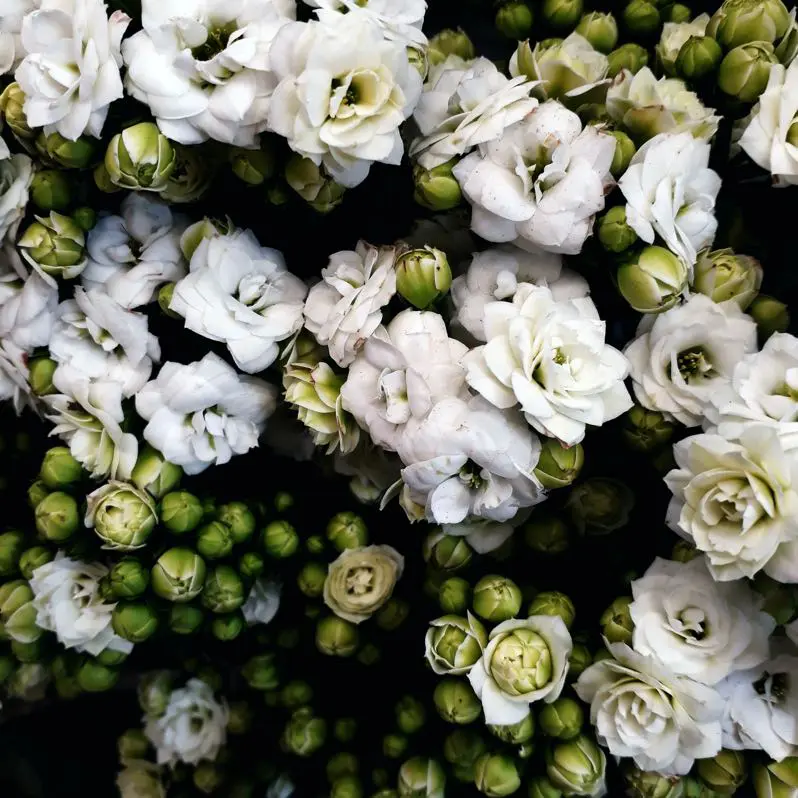
Waxflower (Chamelaucium uncinatum and hybrids) is an evergreen shrub in the Myrtaceae family, native to Western Australia’s coastal heathlands, prized for its waxy, star-shaped flowers and fine-textured foliage that provide long-lasting cut stems in floristry. These aromatic plants grow 1–4 m tall with a spreading to upright habit, featuring narrow, needle-like leaves (1–3 cm long, hooked tips) in dark green and terminal clusters of 0.5–1 cm blooms in white, pink, purple, or bicolors from late winter to spring, symbolizing lasting love and refinement.
Botanical Characteristics
Waxflower produces flexible, reddish-tinged stems densely clad in opposite, terete leaves with a lemony scent when crushed, creating a fine, airy texture. Flowers form in open, terminal panicles with five waxy petals, 10 stamens in two whorls, and a half-inferior ovary yielding small capsules; buds are shiny berry-like before opening.
- Floral traits: Fragrant (honey-citrus); bird/beetle-pollinated; sequential opening for extended display.
- Growth habit: Multi-stemmed from lignotuber; drought-tolerant; silky new growth.
Taxonomy and Classification
Chamelaucium includes ~50 species, with C. uncinatum (Geraldton wax) and hybrids like ‘Lady Stephanie’ (compact pink) dominating cultivation; cultivars offer year-round bloom via short-day induction.
Cultivation Practices
Waxflower thrives in full sun, acidic to neutral, very well-drained sandy soil (pH 6.0–6.5), zones 9–11; plant spring/autumn at 3–7/m²; low water/fertilizer once established. Prune post-bloom (group 8); overwinter dry in pots.
- Maintenance: Frost to -2°C tolerant in hybrids; coastal/windbreak suitable.
- Challenges: Root rot/phytophthora—raised beds essential.
Floristry and Economic Uses
Cut foliage/flowers (vase life 2–4 weeks); winter-spring harvest (40–100 cm stems, 50–500 buds/branch).
Cultural and Symbolic Significance
Aboriginal bush medicine (leaves for colds); Western Australia’s emblem of endurance, its waxy petals symbolizing eternal affection in bridal work since 19th-century exports. Victorian gardeners prized its delicacy against harsh climates, mirroring resilience—modern UK growers favor compact cultivars for patio pots and eco-bouquets, where its subtle scent and longevity bridge native wildness with sophisticated design, evoking coastal heaths and timeless romance.