A lily (true lily) is a herbaceous perennial flowering plant of the genus Lilium in the family Liliaceae, grown from bulbs and valued for its large, often fragrant, trumpet‑ or bowl‑shaped blooms. True lilies are widely used in gardens and floristry and have strong cultural symbolism linked to purity, renewal, and mourning.
Botanical overview
True lilies are upright perennials with leafy stems arising from scaly bulbs that act as storage organs and allow the plant to survive winter dormancy. They are monocots, typically with narrow, parallel‑veined leaves arranged in spirals or whorls along the stem.
- Growth form: Plants usually reach 30–200 cm in height, depending on species and hybrid group. Many produce solitary or clustered flowers at the stem tip or along the upper stem.
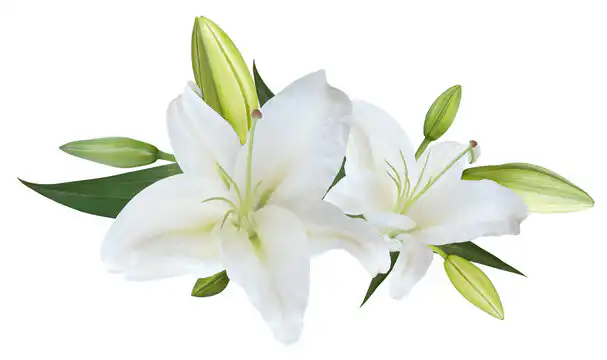
- Flower structure: Lily flowers have six petal‑like tepals, six stamens, and a central pistil, and may be trumpet‑shaped, bowl‑shaped, flat, or strongly recurved (“Turk’s cap”). Colours range from white and cream to yellow, orange, pink, red, and burgundy, often with spots or contrasting throats.
Taxonomy and major groups
True lilies belong to Lilium, a genus with around 90 species distributed mainly across the temperate Northern Hemisphere. Horticulturally, they are divided into sections and hybrid groups based on origin, flower form, and cultural needs.
- Family placement: Lilium sits within Liliaceae, a family of monocot geophytes that also includes genera such as Tulipa and Fritillaria. Many plants commonly called “lilies” (e.g., daylily, lily of the valley, peace lily, calla lily) belong to entirely different families.
- Garden divisions: Garden lilies are often organized into divisions such as Asiatic, Martagon, Candidum, American, Longiflorum, Trumpet/Aurelian, Oriental, and interdivisional hybrids (e.g., LA and OT/Orienpet hybrids). These groups differ in height, fragrance, bloom time, and hardiness.
Ecology and life cycle
Lilies have a seasonal rhythm typical of bulbous perennials in temperate climates. Their bulbs contract and adjust depth over time using specialized roots, helping them cope with soil and climate conditions.
- Seasonal cycle: In spring, shoots emerge from the bulb, followed by rapid stem and leaf growth and flowering from late spring through summer, depending on type. After flowering, foliage photosynthesizes to replenish the bulb before the plant retreats underground for autumn and winter dormancy.
- Reproduction: Lilies reproduce sexually via seeds produced in capsule fruits and vegetatively via bulb scaling, offsets, and sometimes stem bulbils. Seed propagation maintains genetic diversity, while clonal methods preserve named cultivars for horticulture.
Cultivation and garden use
Lilies are popular for borders, mixed plantings, containers, and cutting gardens because of their vertical habit and showy blooms. Different divisions have slightly different soil and light preferences, but several general principles apply.
- Growing conditions: Most lilies prefer well‑drained, humus‑rich soil, with “heads in the sun and feet in the shade” achieved by underplanting or mulching to keep roots cool. They generally thrive in full sun to light shade, with staking recommended for taller cultivars and windy sites.
- Uses in floristry: Longiflorum, Asiatic, and Oriental lilies are mainstays of the cut‑flower trade because of their strong stems, large blooms, and long vase life. Their prominent anthers may be removed to reduce pollen staining on petals and fabrics in arrangements.
Pests, diseases, and toxicity
Lilies face several notable biotic threats and also pose toxicity risks to certain animals. Awareness of these issues is important in both gardens and homes.
- Pests and diseases: Lily beetles (in regions where present), aphids, and various fungal diseases can damage foliage, bulbs, and flowers, especially in poorly drained or overcrowded conditions. Good sanitation, crop rotation in beds, and resistant selections help reduce problems.
- Toxicity: Many Lilium species are highly toxic to cats, with ingestion of any part of the plant or even pollen potentially leading to acute kidney failure. Gardeners and florists are often advised to keep lilies away from households with cats or to use non‑toxic alternatives.
Symbolism and cultural significance
Lilies carry strong symbolic meanings in multiple religious and cultural traditions. Different species and colours emphasize themes such as purity, majesty, and remembrance.
- Religious and artistic symbolism: The white Madonna lily (Lilium candidum) has long been associated with purity and the Virgin Mary in Christian iconography. Lilies frequently appear in paintings, heraldry, and ceremonies as emblems of virtue and spiritual renewal.
- Modern meanings: In contemporary flower language, white lilies often symbolize sympathy and are common in funeral work, while other colours can represent confidence, passion, or celebration. Their dramatic appearance makes them focal flowers in modern bouquets and event design.

Valentine’s Day Roses Collection – Luxury Bouquets by Online Flower Company
May – a month which welcomes an abundance of flowers, but there is one stem whose return truly sets hearts aflutter. From late April the peony, cel…

Seasonal favourite: Peonies
Whether it’s the hue of a precious gem or a stem that reminds them of a special time or place – our florists take inspiration from a plethora of su…

How to dress a festive table
For those of you hosting this Christmas, read on; it’s time to polish up the cutlery, bring out the china plates, and brush up on our top tips on…